
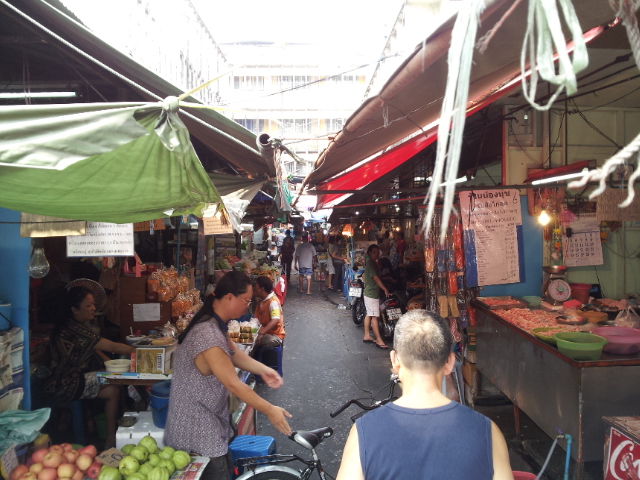
A weekend market off a side street in downtown Bangkok.
A weekend market off a side street in downtown Bangkok.
Posted in Bangkok, Rotary Peace Fellowship
We had Dr David Connolly looking at Post-war recovery for three thought-provoking days this week. David is originally from Belfast (and still has the brogue!) and he specialises in the theory and practice of post-war recovery and peacebuilding at York University.
A clip David used to talk about the traditional approach to Post-war Iraq
We examined many of the theoretical principles behind exclusive and more holistic inclusive post-war recovery/reconstruction. The overall aim is to bridge the gap between conflict transformation and a society after conflict with a more sustainable, social, economic and political order. David used examples from his precious research in Yemen, Indonesia, Afghanistan and Northern Ireland to back his proposals. One of the quotes which stood out to me was actually from a report he published a few years again from home:
“I could cope with the war; it’s the peace I cannot manage” West Belfast Resident in 2007. (At a Post-conflict Juncture: An Assessment of Mental Health and Developmental Needs in Whiterock, Corpus Christi Services)
We also examined “Fragile States” and how conflict can play a part in this fragility. What interested me the most was the models of international development/relief which “grafted” new practices onto existing local processes. Such as the example of the Community Development Councils (CDCs), in Afghanistan (which are part of the National Solidarity Programme) which use the pre-existing Shura, “consultation” process to disseminate funding and manage local projects etc. Overall, David suggested using the term “Integrity” to replace the ideologies behind current “Good Governance” procedures to help maintain accountability, competencies and corruption control in post-war countries.

Dr David Connolly finishing up his final lecture on “Integrity”
There was a great deal to take in over the last few days and to be honest, this entire topic deserves its own blog and I don’t feel like I’m doing it any justice in this post. More than ever though, I am appreciating the benefits of a Systemic Peacebuilding approach to this work (more to follow)
For more information on Post-war Recovery please check out the MA at York University.
Although the vast majority of Thais claim Buddhism as their religion, Thai culture is full of mysticism with stories of spirits and elements of Hindu legend and Animism interwoven into everyday life. One of the most noticeable manifestation of this cultural aspect is in the Spirit House. These “houses” are a shrine to the protective spirit of a place that are found all over Thailand and many other Southeast Asian countries. Most houses and businesses, regardless of how small or how large have a Spirit House placed most often in a corner of the property. The spirit house is normally in the form of a miniature house or temple, and is mounted on a pillar. The house is intended to provide a shelter for spirits which could cause problems for the people if not appeased. Even the newest multi million pound 60+ story skyscraper in Bangkok will have a Spirit House out the front of it somewhere.
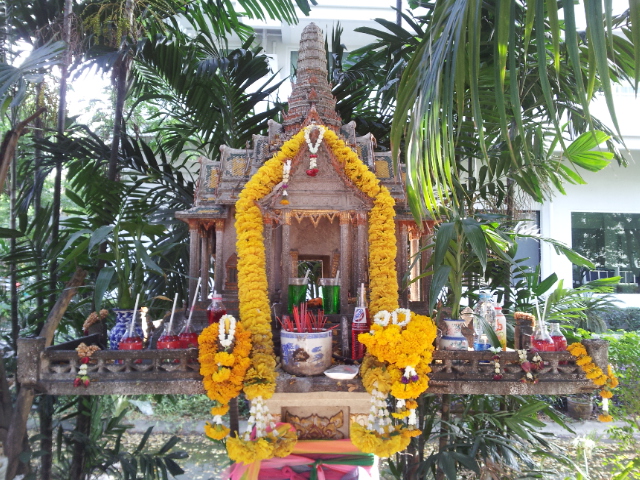
A Spirit House I walk past each day on the University campus.
Posted in Bangkok, Rotary Peace Fellowship, Thailand
One of the most interesting days of the course so far was facilitated by Bobby Anderson on Disarmament, Demobilization and Reintegration (DDR) processes. Bobby is the Deputy Chief of Party at International Relief and Development (IRD) and currently works in Indonesia. He has strategic and programmatic responsibility for one of the largest peacebuilding program in Southeast Asia. As you can imagine he brought a wealth of knowledge to his workshop and I liked his realistic but pragmatic view of the world.
It would have been great to have spent the whole week on DDR as it’s something I’m personally very interested in. It did strike me however that although this process clearly happened at home as a direct result of our “Peace Process” (prisoner releases, decommissioning etc) the formalistic language associated with the ideology of DDR never really made it’s way into the general vocabulary of people in NI. Maybe this is because the modern terminology associated with DDR has only really emerged in the years following a large part of our formal process or perhaps it’s a good example of adapting the accepted discourse of peacebuilding to fit a cultural context (a rose by any other name etc.)
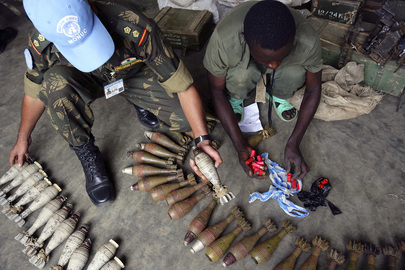
A United Nations peacekeeper from the Indian battalion of the United Nations Organization Mission in the Democratic Republic of the Congo (MONUC) takes stock of weapons and ammunition collected during the Demobilization process in Matembo, North Kivu, in the Democratic Republic of the Congo (2006). Source: UN Multimedia
We then spent Friday examining Security Sector Reform (SSR) from Arie Bloed. Arie has worked extensively Internationally and he focused particularly on Police reform in the afternoon. Not surprisingly we also discussed the transition from the Royal Ulster Constabulary to the Police Service of Northern Ireland.
Posted in Course Content, Rotary Peace Fellowship
Tagged DDR, Demobilization, Disarmament, IRD, peacekeeper, Reintegration, Rotary Peace Fellow, UN
Lisa Monette, who works in Communications for the Canadian Government, facilitated two days at the start of this week around the role of media in war and peacebuilding. She focused on interview techniques, peace/conflict sensitive journalism and “anti rumour” campaigns. To put this type of journalism into context we were shown quite a few examples form the great work of “Search for Common Ground” such as their radio and television shows in various conflict zones around the world.
I also spent Wednesday evening running a workshop for my classmates on the role of social media in our own professional capacities through utilizing LinkedIn, Twitter, Hootsuite etc. to both gather and disseminate information.

“Unwar the Web“: An example of a new social media campaign
The other theory that stuck out to me this week was Johan Galtung’s (1992) twelve points that concerns the values of what he calls war journalism. I thought it would be worth mentioning them here as they offer some food for thought in regards to how we present information in this field:
You can find a more information around these points @ Journalism and power: The role of media in building human rights and a culture of peace
On Friday I bought a copy of this satirical documentary about modern life in Burma. It was released last year and although it’s already outdated a little and it represents only the thoughts of the two French film-makers, it’s still worth watching (with a pinch of salt):
Posted in Resources, Rotary Peace Fellowship
According to the Landmine Monitor 2011:
“Both the military junta in Burma and non-state armed groups have continued to use anti-personnel mines extensively”
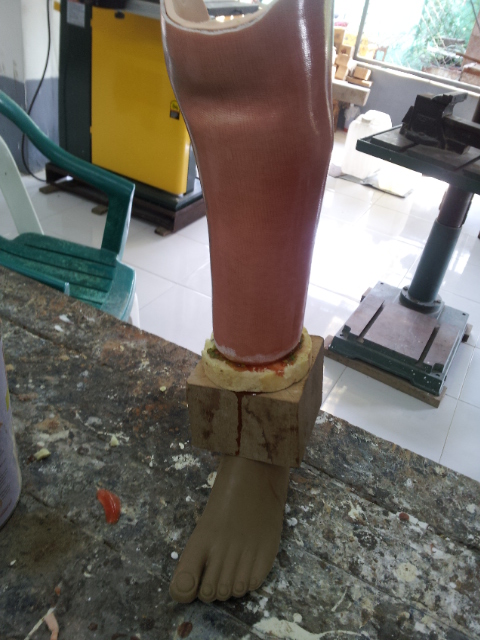
We visited Mae Tao Clinic and were able to see the direct results of these mines first hand. There was a board in the prosthetics room in the clinic with over 2o names of patients awaking new or renewed legs/feet etc. One name was of a 17-year-old boy who was getting his leg “renewed” for the third time. The work of this clinic, founded by Dr. Cynthia Maung was pretty inspirational.
Last year, Nobel Peace Laureate Aung San Suu Kyi called on all combatants to “cease the way of mines” and all groups to “start to ban landmines in their operations without waiting for their opponent to start to do it.”
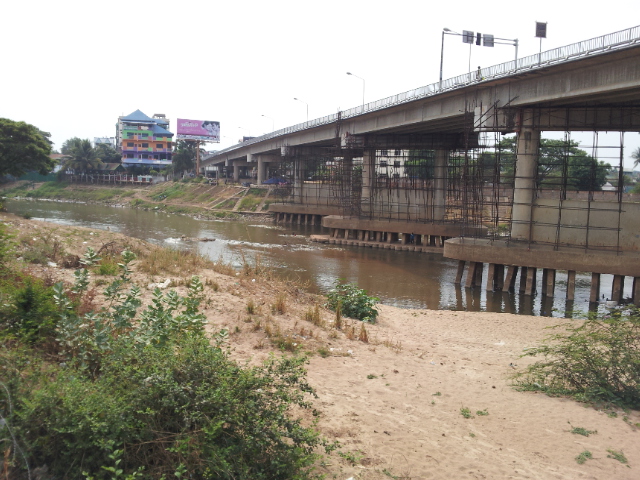
The “Friendship” Bridge separating the two countries (Burma in the distance)
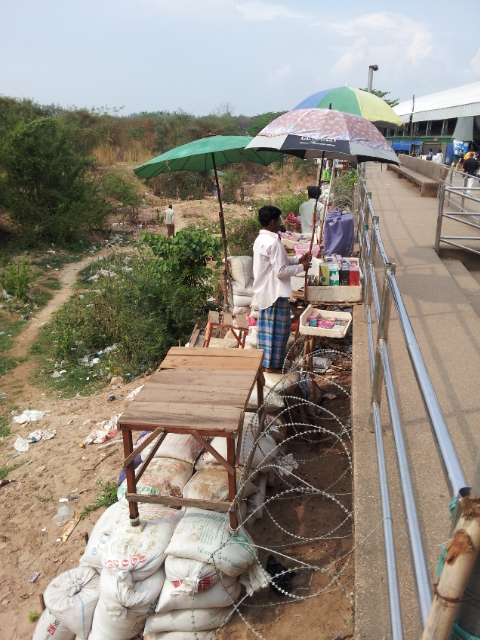
Border Trade. They grey area between Burma (on the left) and Thailand (on the right side of the barrier) with stalls build on-top of the razor wire.
Posted in Rotary Peace Fellowship, Uncategorized
Our first field trip is to border town on Mae Sot. It’s an industrial town situated seven hours north-east of Bangkok on the Burma/Myanmar border.
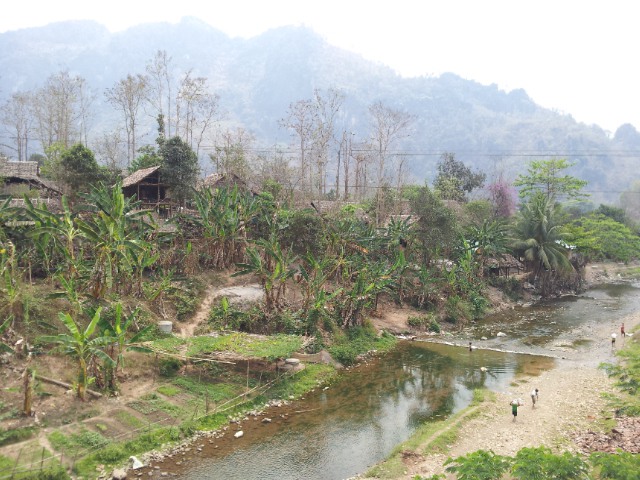
Mae La, 28-year-old “Temporary Shelter” for 50,000 people on the border
We arrived on Sunday and we’ve spent the last few days meeting NGO’s and governmental organisations dealing with issues around Human Trafficking, Human Rights and Migrant Labour. There have been many meetings each day which have so far included the United Nations High Commission on Refugees (UNHCR), the International Rescue Committee (IRC) and woman’s groups representing the Karen tribe etc. Not surprisingly, the details of how traffickers practically go about their daily business, has been the most sobering. The internet connection hasn’t been great up here so I’ll be adding more details over the weekend when I get back to Bangkok.
Posted in Field Trips, Rotary Peace Fellowship
Tagged Human Rights, Human Trafficking, Mae Sot, Migrant Labour, United Nations
Last week was spent with Jan Sunoo and Pat Dunn from the Federal Mediation & Conciliation Service in the USA. It was an intense week and we looked at tools and techniques for third part interventions including an Interest Based Negotiation model.
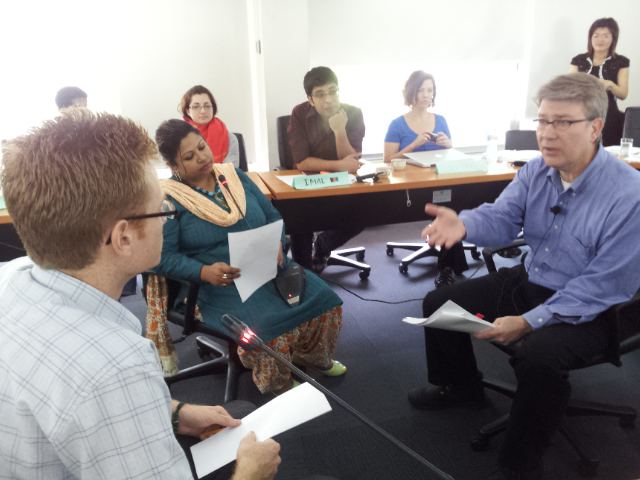
Pat demonstrating some active negotiation skills
Many of the skills were similar to that of TIDES’s OCN courses in Conflict Management (active listening, summarising, paraphrasing and re-framing etc.) but the process itself differed in the fact that it focussed very much on negotiation and not on mediation as a form on conflict resolution (i.e. the ability of the third-party to offer potential alternative solutions was much greater). I was able to co-facilitate a full day role play with Jan which allowed to me an insight into the more subtle nuisances of the process itself. We also looked at other facilitation techniques such as Appreciative Inquiry and Open Space Technology.
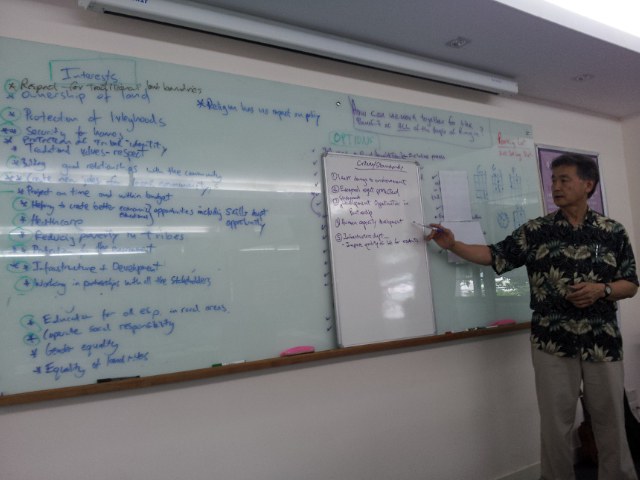
Jan looking at Issues and Criteria in an Interest based Negotiation situation.

