Category Archives: Uncategorized

Rotary International Peace Conference

The powerful message of “Peace though Service” of the Rotary International Peace Conference in Derry-Londonderry was underpinned by the emotive portrayal of Theatre of Witness.  We watched as a unique example of storytelling though the arts in Northern Ireland was presented though the stories and voices of some of those directly affected by the conflict.  It provided a watershed moment in the conference by allowing us to reflect on the human cost of conflict and the various approaches to dealing with its legacy.

As a member of District 1100 eClub and a year after completing my Rotary Peace Fellowship in Chulalongkorn University in Bangkok I was fortunate to present a Master Class in Peacebuilding at the Rotary Peace Conference in my home City of Derry-Londonderry.  It was a fitting venue for the Conference as the name of the City of Derry or Londonderry is still subject of an on-going naming dispute between nationalists and unionists with the mention of either name acting as a signifier of communal affiliation used to associate the speaker with one of Northern Ireland’s two main communities.

The foremost Peace Conference in Ireland this year was jointly organised by the International Conflict Research Institute (INCORE) and the Rotary Club of Londonderry.  The aim of which was to contribute to reconciliation, learning and full self-expression for those involved in peacemaking and peacebuilding throughout the world.  The Conference brought academics, political, business, community leaders and peace activists from around the world to venues across the city to explore making, building and embedding peace from a local and international perspective.

Image

The Stage at the Peace Conference 

I currently work as a training manager and mediator for TIDES Training & Consultancy who are an ethnically based non-profit peacebuilding charity based in Belfast.  Together with the Director of TIDES Training, Mary Montague I delivered a workshop titled “Practical Systemic Peacebuilding”.  This workshop focused on our mediation and “iceberg” models, systemic peacebuilding processes and the importance of theories of change in the work that we do.  My personal highlights include looking up and noticing Rotary International President Sakuji Tanaka attending the workshop and also being able to talk about our work to members of the Belfast West Rotary Club who kindly sponsored my peace fellowship.

Image

Mr Sakuji Tanka with members of the Belfast West Rotary Club

In this the Rotary year of “Peace Through Service”, INCORE and the Rotary Club in Derry-Londonderry organised an outstanding three day conference which I believed truly showcased the potential of Rotary to contribute to Peace.

Now is the time to come and witness 

our journey from conflict, through 

reconciliation towards Peace. 

So hope for a great sea change 

On the far side of revenge. 

Believe that a farther shore 

Is reachable from here. 

Believe in miracles 

And cures and healing wells. 

Seamus Heaney


Beyond a Rotary Peace Fellowship

This blog was originally set up to record my time participating in a Professional Development Certificate on a Rotary Peace Fellowship from February – May 2012 in Chulalongkorn University Bangkok, Thailand.

In the past year since finishing the Fellowship I have found the course extremely beneficial to my professional life at TIDES Training & Consultancy and it has allowed me to become more involved with Mediators Beyond Borders International.

Therefore I’ve decided to continue this blog focusing on wider systemic peacebuilding issues and I’m retaining the originally blog posts under this heading in the hope that it will encourage others to apply for the Peace Fellowship and to act as a resource to those who are successful in their applications.

Feel free to contact me if you have any questions about the application process for the fellowship and I hope you find these posts useful!

Looking over the horizon. (Image from swissre.com ad.)

Media in Conflict Situations

Lisa Monette, who works in Communications for the Canadian Government, facilitated  two days at the start of this week around the role of media in war and peacebuilding.  She focused on interview techniques, peace/conflict sensitive journalism and “anti rumour” campaigns.  To put  this type of journalism into context we were shown quite a few examples form the great work of “Search for Common Ground” such as their radio and television shows in various conflict zones around the world.

I also spent Wednesday evening running a workshop for my classmates on the role of social media in our own professional capacities through utilizing LinkedIn, Twitter, Hootsuite etc. to both gather and disseminate information.

Unwar the Web“: An example of a new social media campaign

The other theory that stuck out to me this week was Johan Galtung’s (1992) twelve points that concerns the values of what he calls war journalism.  I thought it would be worth mentioning them here as they offer some food for thought in regards to how we present information in this field:

  1. A focus on violence as its own cause-thus decontexualizing violence, not looking at the reasons,
  2. Dualism, always reduces to two parts, and hereof winners-losers which makes non-violent outcome ignored
  3. Manicheanism; the two parts consists of the contradictions good-evil,
  4. Armageddon, violence is inevitable,
  5. Focus on individual, avoiding structural causes,
  6. Making confusion by only a focus on battlefield and visible effects, not on underlying forces
  7. Excluding and omitting the bereaved, thus never explaining why there are actions of revenge/violence spirals
  8. Failure to explore the causes of escalation and the impact of media coverage itself,
  9. Failure to explore the goals of outside interventionists,
  10. Failure to explore peace proposals, and offer images of peaceful outcomes
  11. Confusing cease-fires and negotiations with actual peace, peace is defined as victory plus ceasefire
  12. Omitting reconciliation; and conflicts tend to re-emerge if wounds are not healed

You can find a more information around these points @ Journalism and power: The role of media in building human rights and a culture of peace

Results of Conflict

According to the Landmine Monitor 2011:

“Both the military junta in Burma and non-state armed groups have continued to use anti-personnel mines extensively”

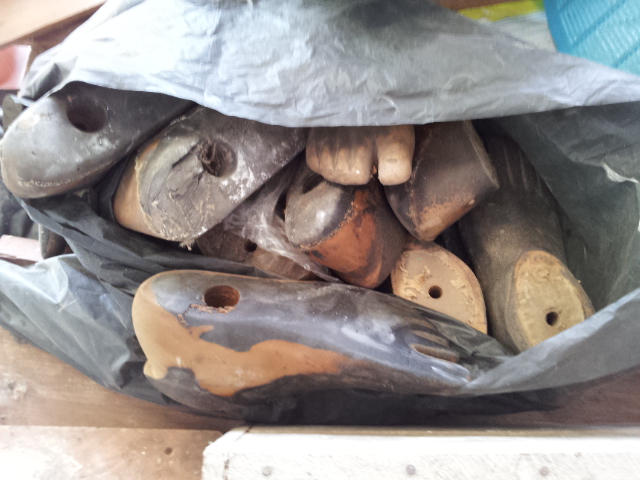
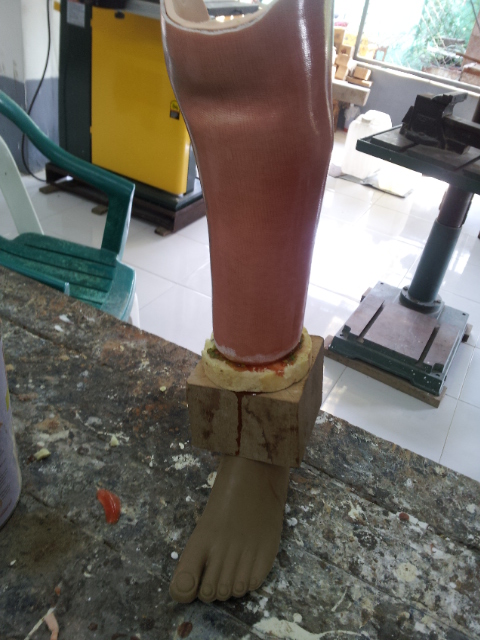
We visited Mae Tao Clinic and were able to see the direct results of these mines first hand.  There was a board in the prosthetics room in the clinic with over 2o names of patients awaking new or renewed legs/feet etc. One name was of a 17-year-old boy who was getting his leg “renewed” for the third time.  The work of this clinic, founded by Dr. Cynthia Maung was pretty inspirational.

Last year, Nobel Peace Laureate Aung San Suu Kyi called on all combatants to “cease the way of mines” and all groups to “start to ban landmines in their operations without waiting for their opponent to start to do it.”

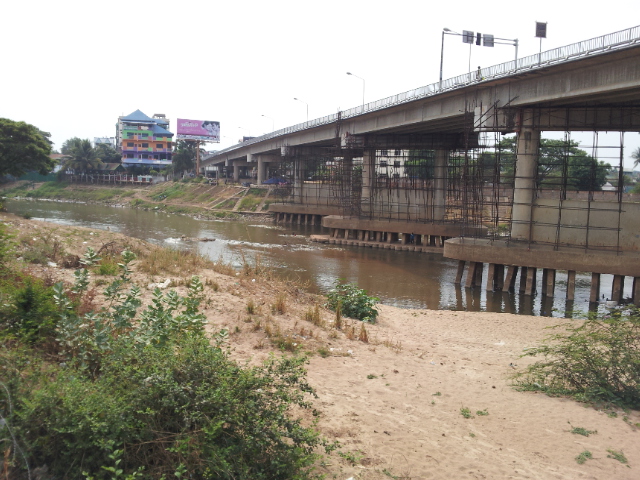
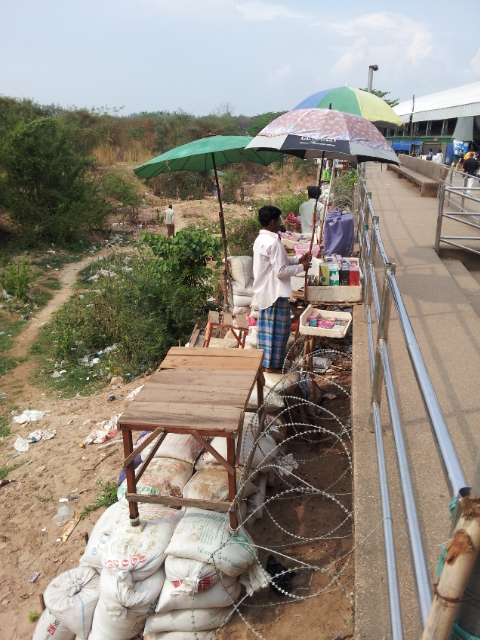
Thai-Burma Trade Border

The “Friendship” Bridge separating the two countries (Burma in the distance)

Border Trade.  They grey area between Burma (on the left) and Thailand (on the right side of the barrier) with stalls build on-top of the razor wire.

Cross Cultural Conflict Resolution

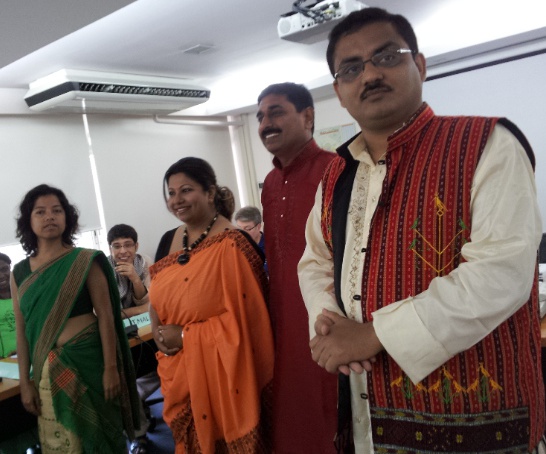
Monday was “Cross Cultural Conflict Resolution” day so we all had to dress in our national clothes.  As you can see from the pictures below many of my colleagues had their traditional attire, I on the other hand ended up going to the local shopping centre and finding a”traditional” Ireland Rugby shirt… along with a picture of Dunluce Castle and a stuffed leprechaun!


Imal from Afghanistan                                                   Wisdom from Ghana

Bana, Sagorika, Indrajee and Jayanta from India

We looked at Cultural Competency and explored some of the issues around “unearned privileges” and “daily indignities”.  The rest of this week has been about Meditation and Negotiation…


Image

Conflict Evolution

Conflict Evolution