Field Trip 2: Nepal

We left for Kathmandu last week for the second of our field trips.  The overall theme was “Conflict Transformation and Building a Sustainable Peace”.  Nepal is in the process of recovering from a ten-year conflict which was finally ended with the Comprehensive Peace Agreement (CPA) in 2006.  When we were there the politicians where in the middle of negotiations about the Constitution which must be agreed  upon by the 29th May.

A view of Kathmandu from the Monkey Temple

Kathmandu struck me as a very culturally rich city with many historically significant sites such as Bodhnath Stupa and the Living Goddess Kumari.
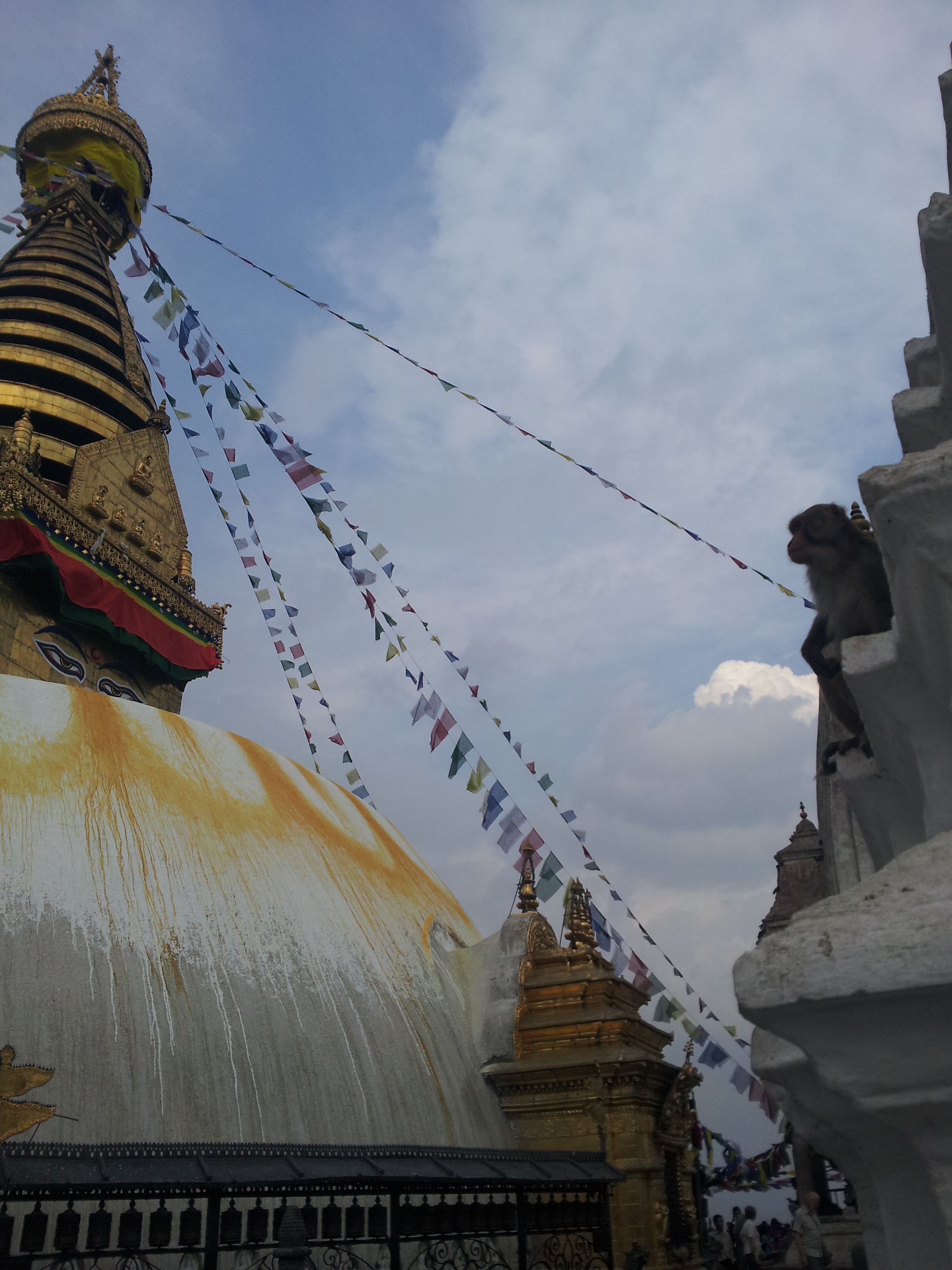
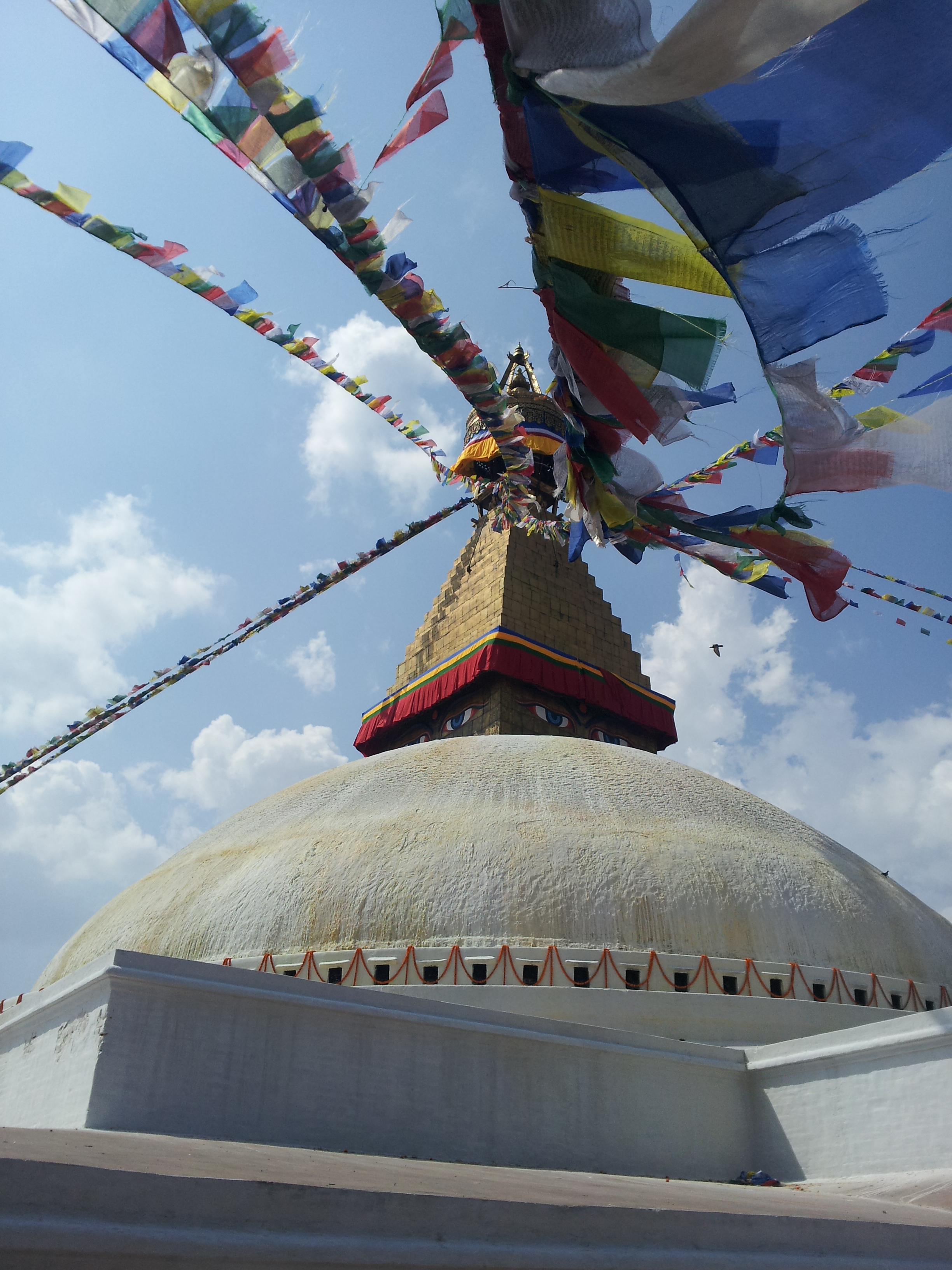
Buddhists Stupa’s (Bodhnath & the Monkey Temple, accordingly)

At the same time though you cannot help but be caught up in the traffic chaos and taken aback at the sheer amount of rubbish in the city.  It is estimated that 42% of the overall population of the country are living below the poverty line and the difficulties that a ten-year conflict creates in terms of governance, civic amenities etc. are very evident.
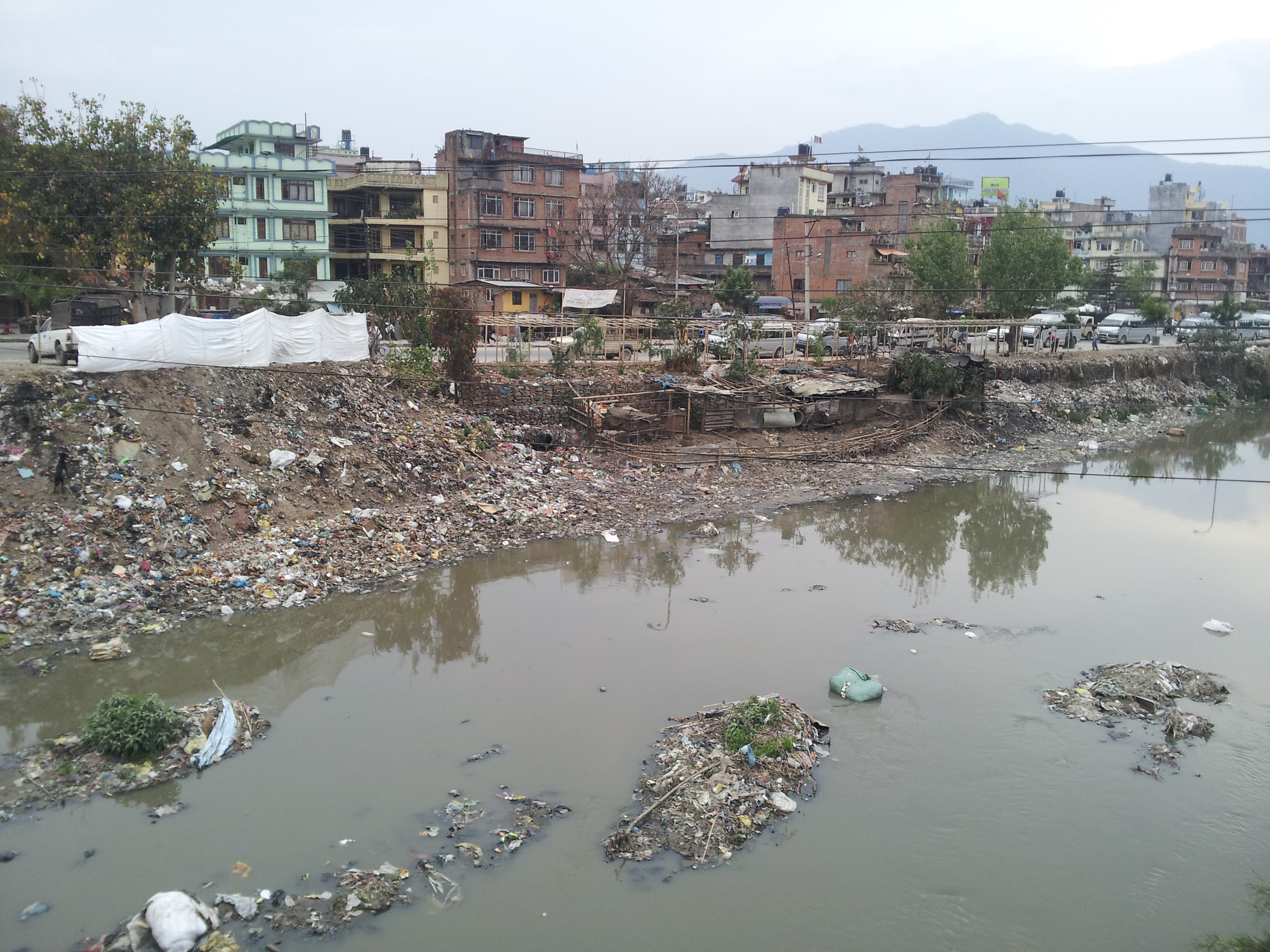
Waste Management Issues on the Bagmati River in Kathmandu
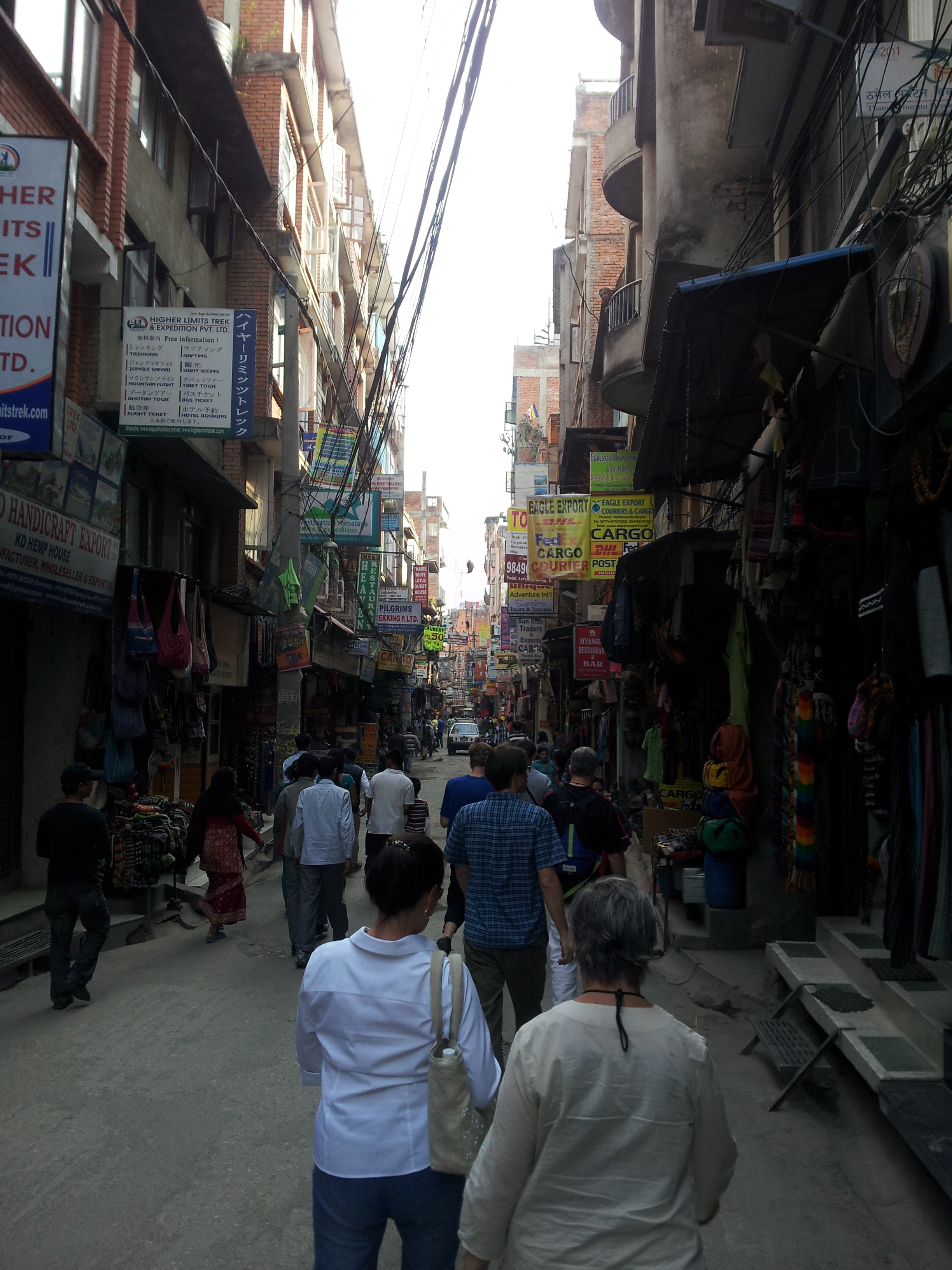
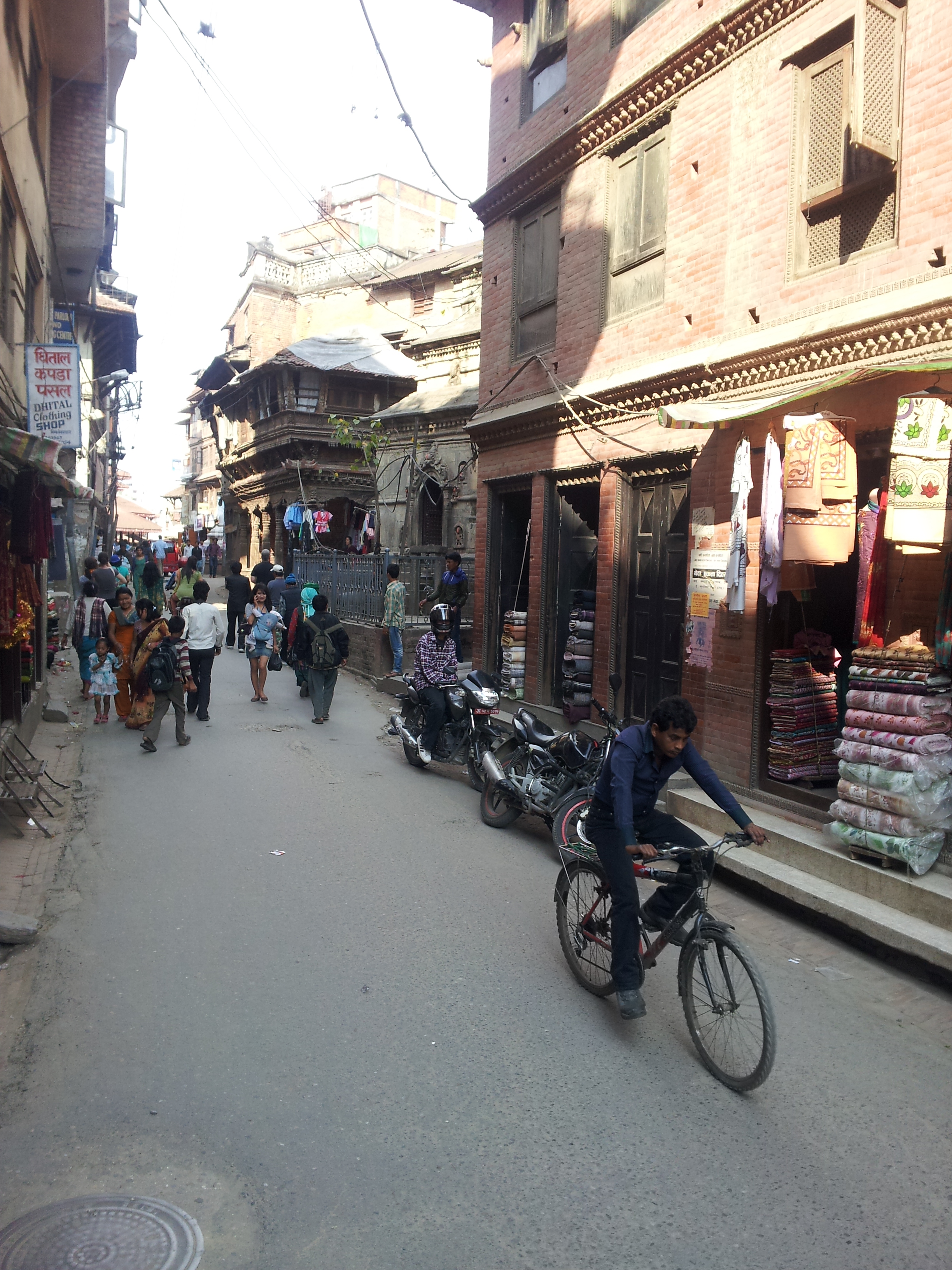


With over a dozen formal meetings with various NGO’s and a 7-12 hour journey to Pokhara midway though the week, it was an intense field trip.  More pictures and details to follow…
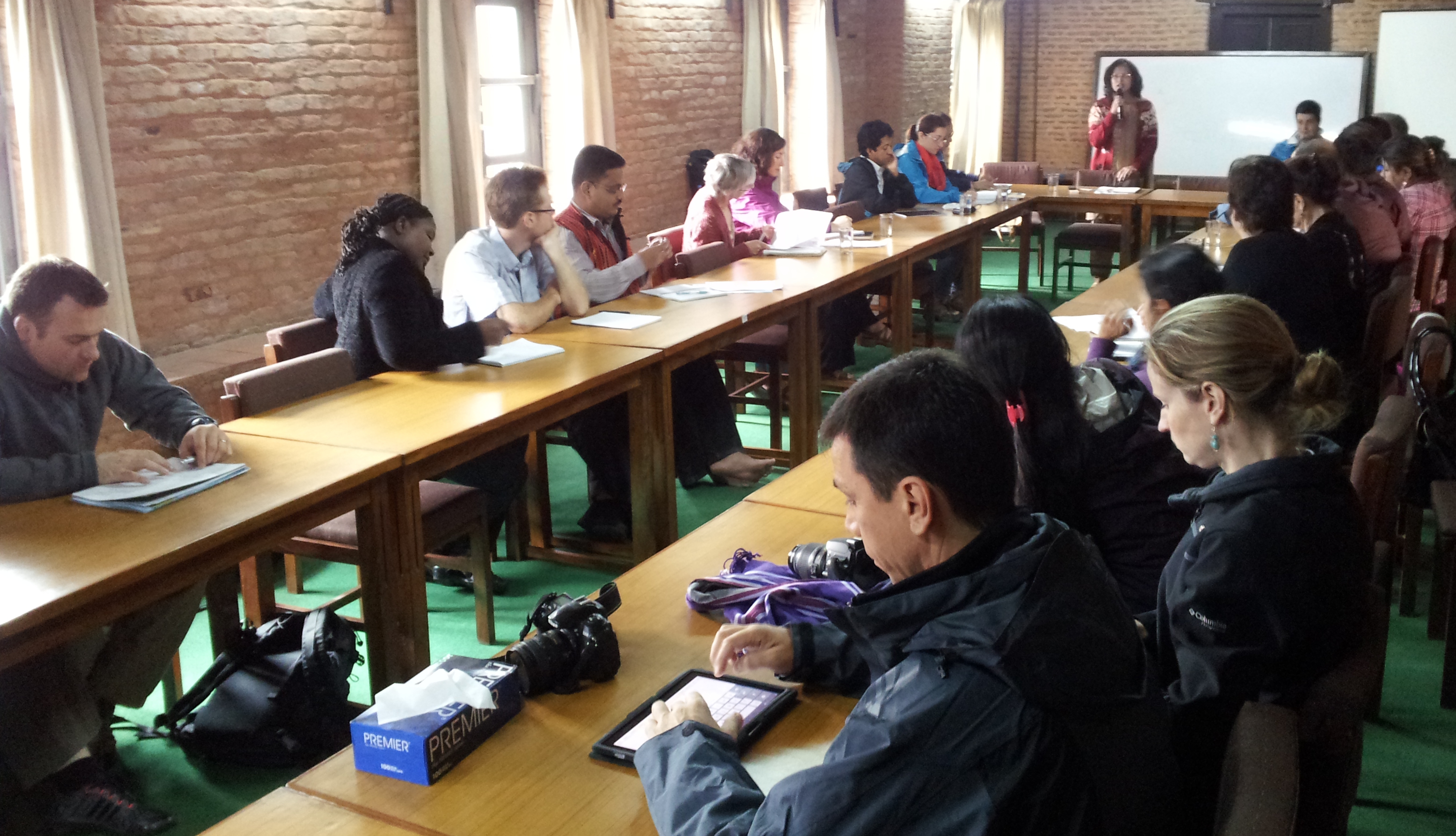
Meeting at The Nepal Transition to Peace (NTTP) Initiative
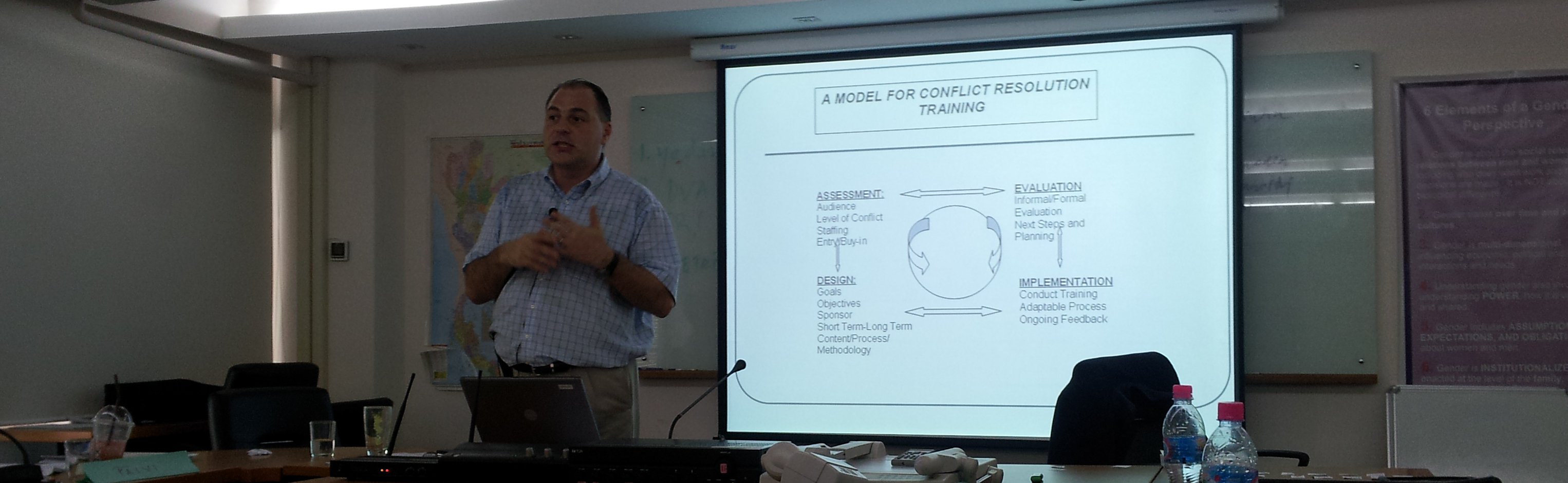
Theories of Change

Miki Jacevic, a human rights activist and peace program specialist from Sarajevo, facilitated an excellent week on capacity building, theories of change and evaluation and monitoring processes this week.  If your interested in more details on “Theories of Change” in peacebuilding I can highly recommend the new report from Care International and International Alert which can be downloaded here.  I’m hopping to visit Alert in Nepal next week and as I’m in the middle of packing I’ll get some more details up here the next time I have internet access…

Miki Jacevic at work

Transitional Justice

The United Nations defines transitional justice as “the full range of processes and mechanisms associated with a society’s attempts to come to terms with a legacy of large-scale past abuses, in order to ensure accountability, serve justice and achieve reconciliation.”

As an example of one of these processes we watched a film about the Gacaca courts set up in Rwanda after the genocide; In the Tall Grass.  I’ve watched “Hotel Rwanda” and “Shooting Dogs” many times before, which are both about the events of the Genocide but this particular documentary conveyed just how difficult the transitional justice process can be  after such a horrific event on such a massive scale:

Modern Bangkok Life

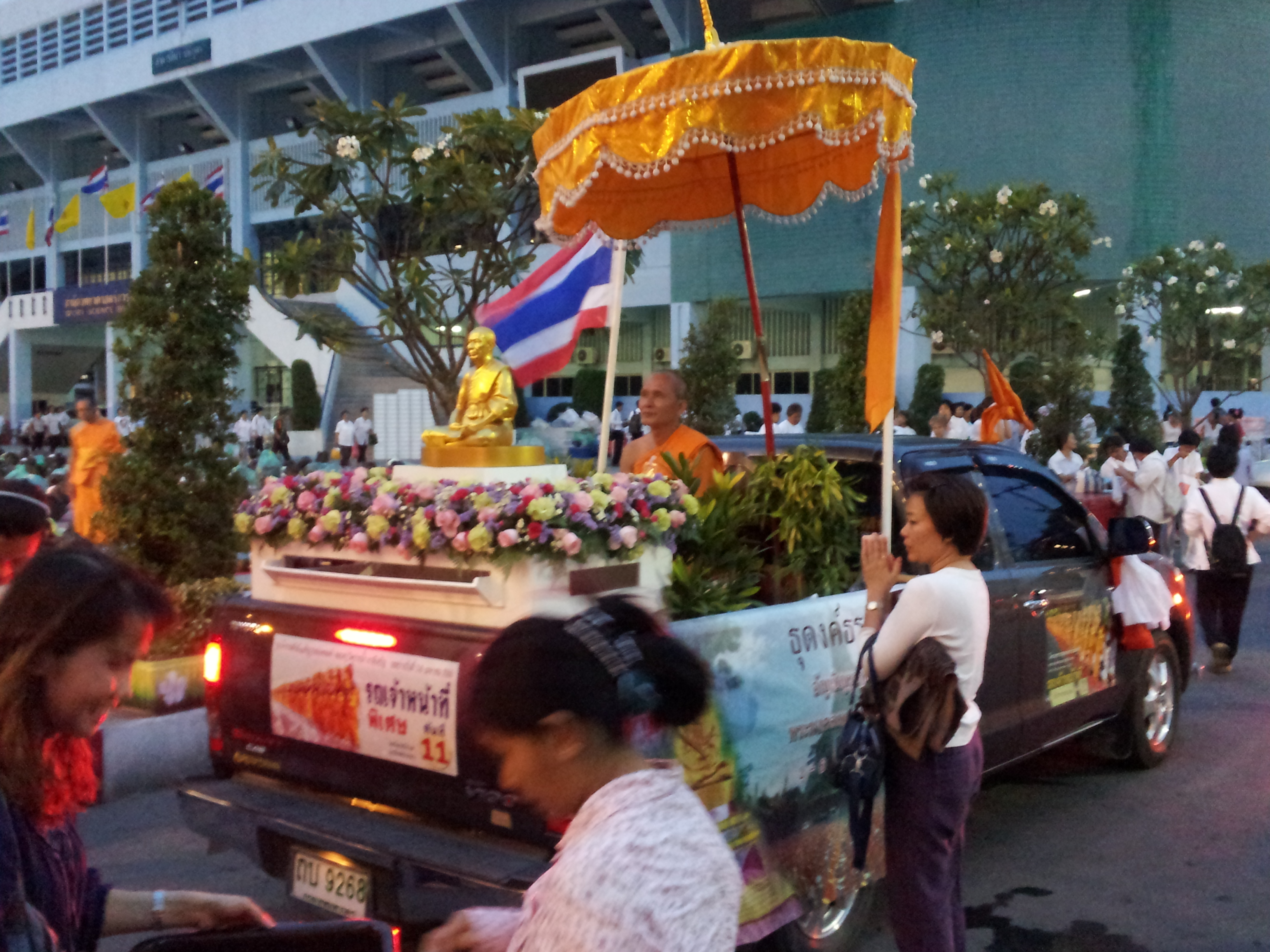
Walking back from the University today I came across over 100 monks outside the National Stadium for a retreat event.  I thought this picture (taken in the major shopping district) speaks to how modern Bangkok has amalgamated  religious ideology with modern life.  Buddhist monks are still highly respected in Thai society.

Conflict Trauma

Associate Professor John Pead from Australia lectured us for two days about the results of Trauma associated with conflict such as Post Traumatic Stress Disorder (PTSD).  He clearly defined Trauma as being an event in which you believe your life to be at risk.  We looked at the process of ‘Allostatic Loads’ in which your body experiences wear and tear due to repeated cycles of stress and talked about the consequences of bitterness to an individual and to a community.  John’s work is largely based with the aboriginal community in North East Australia and quite a bit of his work seems to revolve around the process of conflict being transferred from one generation to the next through “Transgenerational Trauma.   His style was very fluid and allowed me to reflect a lot upon some of the groups I’ve worked with at home.   

John talking about Trauma related issues

Bangkok Market

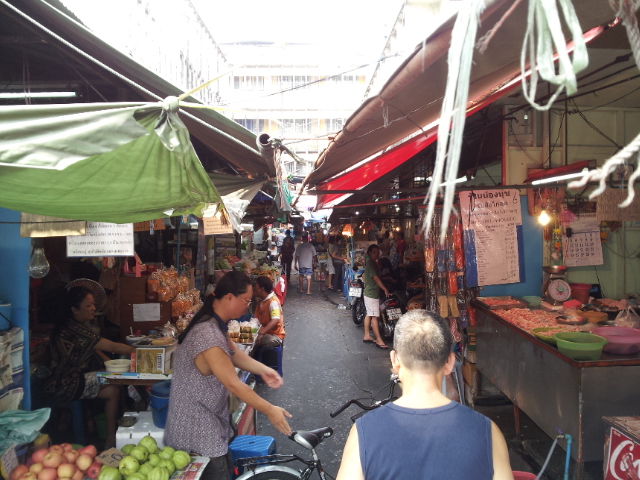
A weekend market off a side street in downtown Bangkok.

Post-war Recovery

We had Dr David Connolly looking at Post-war recovery for three thought-provoking days this week.  David is originally from Belfast (and still has the brogue!) and he specialises in the theory and practice of post-war recovery and peacebuilding at York University.

A clip David used to talk about the traditional approach to Post-war Iraq

We examined many of the theoretical principles behind exclusive and more holistic inclusive post-war recovery/reconstruction.  The overall aim is to bridge the gap between conflict transformation and a society after conflict with a more sustainable, social, economic and political order.  David used examples from his precious research in Yemen, Indonesia, Afghanistan and Northern Ireland to back his proposals.  One of the quotes which stood out to me was actually from a report he published a few years again from home:

“I could cope with the war; it’s the peace I cannot manage” West Belfast Resident in 2007. (At a Post-conflict Juncture: An Assessment of Mental Health and Developmental Needs in Whiterock, Corpus Christi Services)

We also examined “Fragile States” and how conflict can play a part in this fragility.  What interested me the most was the models of international development/relief which “grafted” new practices onto existing local processes. Such as the example of the Community Development Councils (CDCs), in Afghanistan (which are part of the National Solidarity Programme) which use the pre-existing Shura, “consultation” process to disseminate funding and manage local projects etc.  Overall, David suggested using the term “Integrity” to replace the ideologies behind current “Good Governance” procedures to help maintain accountability, competencies and corruption control in post-war countries.

Dr David Connolly finishing up his final lecture on “Integrity”

There was a great deal to take in over the last few days and to be honest, this entire topic deserves its own blog and I don’t feel like I’m doing it any justice in this post.  More than ever though, I am appreciating the benefits of a Systemic Peacebuilding approach to this work (more to follow)

For more information on Post-war Recovery please check out the MA at York University.

Spirit House

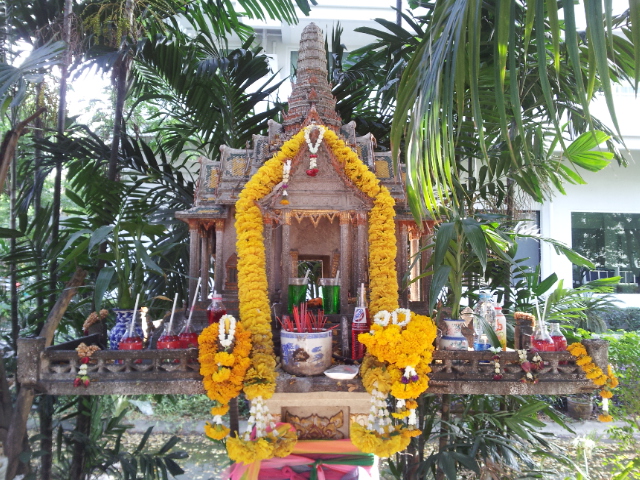
Although the vast majority of Thais claim Buddhism as their religion, Thai culture is full of mysticism with stories of spirits and elements of Hindu legend and Animism interwoven into everyday life.  One of the most noticeable manifestation of this cultural aspect is in the Spirit House.  These “houses” are a shrine to the protective spirit of a place that are found all over Thailand and many other Southeast Asian countries.  Most houses and businesses, regardless of how small or how large have a Spirit House placed most often in a corner of the property. The spirit house is normally in the form of a miniature house or temple, and is mounted on a pillar. The house is intended to provide a shelter for spirits which could cause problems for the people if not appeased. Even the newest multi million pound 60+ story skyscraper in Bangkok will have a Spirit House out the front of it somewhere.

A Spirit House I walk past each day on the University campus.

DDR: Disarmament, Demobilization and Reintegration

One of the most interesting days of the course so far was facilitated by Bobby Anderson on Disarmament, Demobilization and Reintegration (DDR) processes.  Bobby is the Deputy Chief of Party at International Relief and Development (IRD) and currently works in Indonesia.  He has strategic and programmatic responsibility for one of the largest peacebuilding program in Southeast Asia.  As you can imagine he brought a wealth of knowledge to his workshop and I liked his realistic but pragmatic view of the world.

It would have been great to have spent the whole week on DDR as it’s something I’m personally very interested in.  It did strike me however that although this process clearly happened at home as a direct result of our “Peace Process” (prisoner releasesdecommissioning etc)  the formalistic language associated with the ideology of DDR never really made it’s way into the general vocabulary of people in NI.  Maybe this is because the modern terminology associated with DDR has only really emerged in the years following a large part of our formal process or perhaps it’s a good example of adapting the accepted discourse of peacebuilding to fit a cultural context (a rose by any other name etc.)

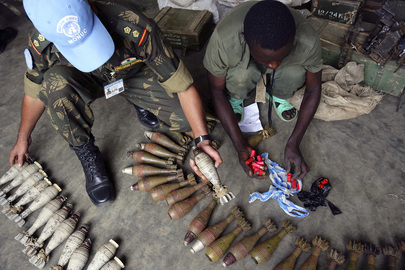
A United Nations peacekeeper from the Indian battalion of the United Nations Organization Mission in the Democratic Republic of the Congo (MONUC) takes stock of weapons and ammunition collected during the Demobilization process in Matembo, North Kivu, in the Democratic Republic of the Congo (2006). Source: UN Multimedia

We then spent Friday examining Security Sector Reform (SSR) from Arie Bloed.  Arie has worked extensively Internationally and he focused particularly on Police reform in the afternoon.  Not surprisingly we also discussed the transition from the Royal Ulster Constabulary to the Police Service of Northern Ireland.

Media in Conflict Situations

Lisa Monette, who works in Communications for the Canadian Government, facilitated  two days at the start of this week around the role of media in war and peacebuilding.  She focused on interview techniques, peace/conflict sensitive journalism and “anti rumour” campaigns.  To put  this type of journalism into context we were shown quite a few examples form the great work of “Search for Common Ground” such as their radio and television shows in various conflict zones around the world.

I also spent Wednesday evening running a workshop for my classmates on the role of social media in our own professional capacities through utilizing LinkedIn, Twitter, Hootsuite etc. to both gather and disseminate information.

Unwar the Web“: An example of a new social media campaign

The other theory that stuck out to me this week was Johan Galtung’s (1992) twelve points that concerns the values of what he calls war journalism.  I thought it would be worth mentioning them here as they offer some food for thought in regards to how we present information in this field:

  1. A focus on violence as its own cause-thus decontexualizing violence, not looking at the reasons,
  2. Dualism, always reduces to two parts, and hereof winners-losers which makes non-violent outcome ignored
  3. Manicheanism; the two parts consists of the contradictions good-evil,
  4. Armageddon, violence is inevitable,
  5. Focus on individual, avoiding structural causes,
  6. Making confusion by only a focus on battlefield and visible effects, not on underlying forces
  7. Excluding and omitting the bereaved, thus never explaining why there are actions of revenge/violence spirals
  8. Failure to explore the causes of escalation and the impact of media coverage itself,
  9. Failure to explore the goals of outside interventionists,
  10. Failure to explore peace proposals, and offer images of peaceful outcomes
  11. Confusing cease-fires and negotiations with actual peace, peace is defined as victory plus ceasefire
  12. Omitting reconciliation; and conflicts tend to re-emerge if wounds are not healed

You can find a more information around these points @ Journalism and power: The role of media in building human rights and a culture of peace