
We had Dr David Connolly looking at Post-war recovery for three thought-provoking days this week. David is originally from Belfast (and still has the brogue!) and he specialises in the theory and practice of post-war recovery and peacebuilding at York University.
A clip David used to talk about the traditional approach to Post-war Iraq
We examined many of the theoretical principles behind exclusive and more holistic inclusive post-war recovery/reconstruction. The overall aim is to bridge the gap between conflict transformation and a society after conflict with a more sustainable, social, economic and political order. David used examples from his precious research in Yemen, Indonesia, Afghanistan and Northern Ireland to back his proposals. One of the quotes which stood out to me was actually from a report he published a few years again from home:
“I could cope with the war; it’s the peace I cannot manage” West Belfast Resident in 2007. (At a Post-conflict Juncture: An Assessment of Mental Health and Developmental Needs in Whiterock, Corpus Christi Services)
We also examined “Fragile States” and how conflict can play a part in this fragility. What interested me the most was the models of international development/relief which “grafted” new practices onto existing local processes. Such as the example of the Community Development Councils (CDCs), in Afghanistan (which are part of the National Solidarity Programme) which use the pre-existing Shura, “consultation” process to disseminate funding and manage local projects etc. Overall, David suggested using the term “Integrity” to replace the ideologies behind current “Good Governance” procedures to help maintain accountability, competencies and corruption control in post-war countries.

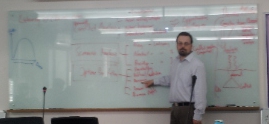
Dr David Connolly finishing up his final lecture on “Integrity”
There was a great deal to take in over the last few days and to be honest, this entire topic deserves its own blog and I don’t feel like I’m doing it any justice in this post. More than ever though, I am appreciating the benefits of a Systemic Peacebuilding approach to this work (more to follow)
For more information on Post-war Recovery please check out the MA at York University.
 Practical Peace